


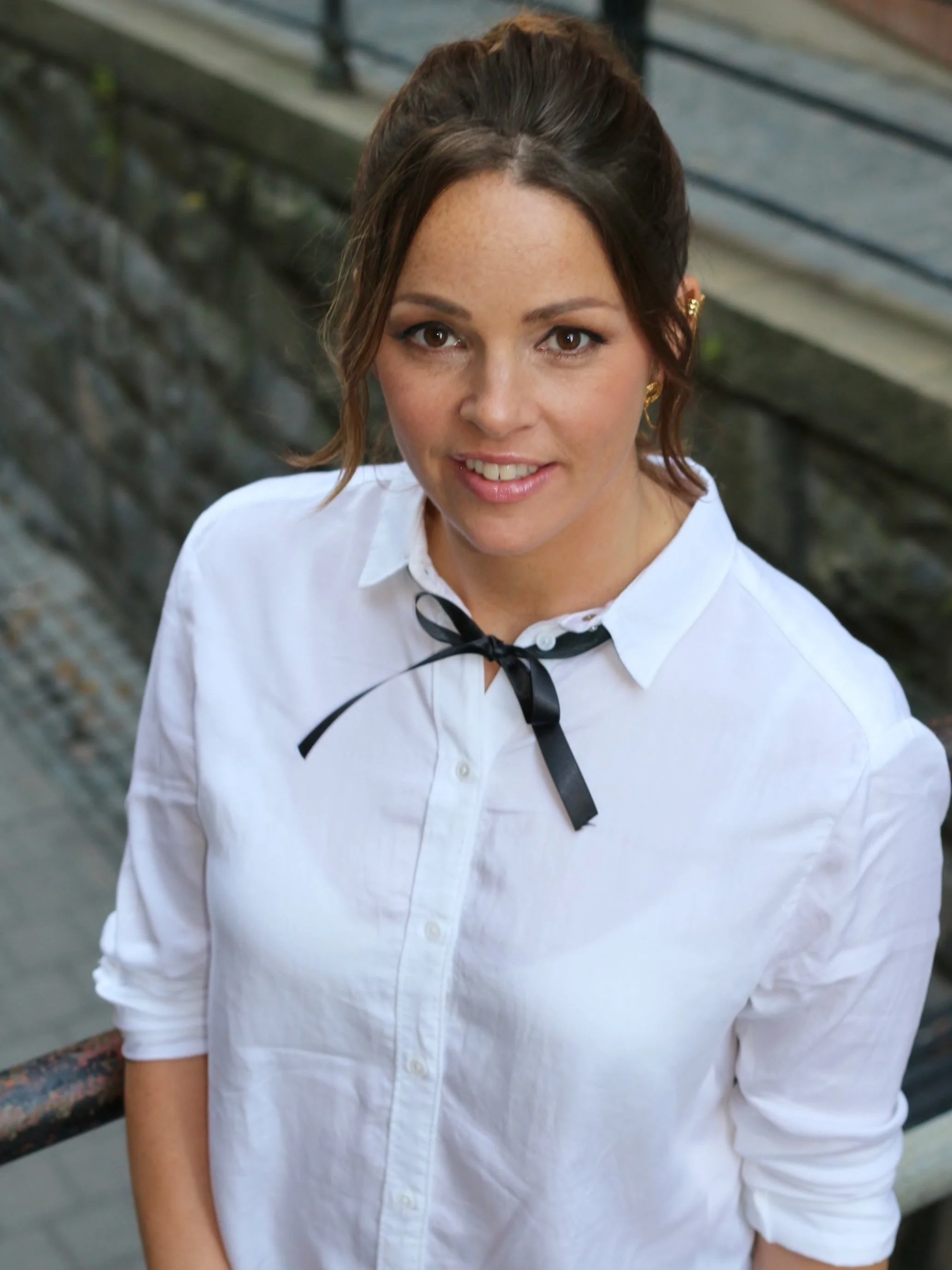
Anna Christoffersson on the power of music in personal farewells
When someone passes away, a notion often arises that a funeral must follow fixed frameworks. But the parting can be as unique as the life that the person leaves behind. There is a great scope to shape ceremonies that reflect the person, the relationships and all that is carried on.
Today, more and more families seek farewells that feel close and meaningful, where the tone, the words and the place together create a memory to rest in. In the process, music has become a central companion. It expresses what may be hard to say, but easy to feel.
“I sometimes think of funerals as a kind of tribute concert,” says artist and officiant Anna Christoffersson and continues: “People's lives are worth highlighting. When we do something beautiful together, it becomes a gift to those who are left behind.”
Music — a common place to meet
Music can carry memories of a lifetime. It invites presence in a moment that often holds both missing and stillness, and it unites people with different experiences and feelings.
It is also something that many relatives testify to. A person who hired Anna put it this way:
“Experience from a funeral: Anna and her fellow musicians showed an incredibly good musical performance. I know that they are all famous musicians with great CVs, but at least I want to say that this was one of the best things I have experienced on such an occasion. Astonishing singing, lovely piano playing, what an amazing tone in the trumpet.. all so subtle and beautiful, couldn't get any better for our dear friend's funeral.“ Customer about Anna at Trustpilot
For many, music becomes a bridge between silence and what needs to be said, between grief and everything that lives on in the heart. Musique crire un movimento, una dirección y una seguridad para restar
From Grammy nominations to ceremonial work
Anna has lived with music throughout her professional life and is a multiple Grammy nominee in jazz. Quando è studiato come un attore funerale, la sua artistry took on a new dimension: creating experiences that provide support, warmth and meaning in one of life's most vulnerable moments.
“I have always created whole things, both concerts, events, ceremonies. In this work, music becomes a tool that makes a real difference for people.”
In meeting with families, she uses both her voice and her feeling to shape the context. Sometimes she leads the whole ceremony, sometimes she contributes solely to the music. The shape is always adapted to the person who passed away and to those who gather to remember.
Parting that feels personal and cohesive
A personal farewell is about more than music. It's about how the whole moment gets to shape the rhythm, the pauses, the stories and the presence.
Regardless of how the ceremony is set up, the goal is the same: to create a safe place where people are allowed to be together, without demands, with room for both tears and gratitude.
When a ceremony is thought out and shaped after the people attending, it can provide support long afterwards. When parting becomes personal, it often becomes a memory to hold on to, where the music helps to carry both the grief and all that is left to live on.
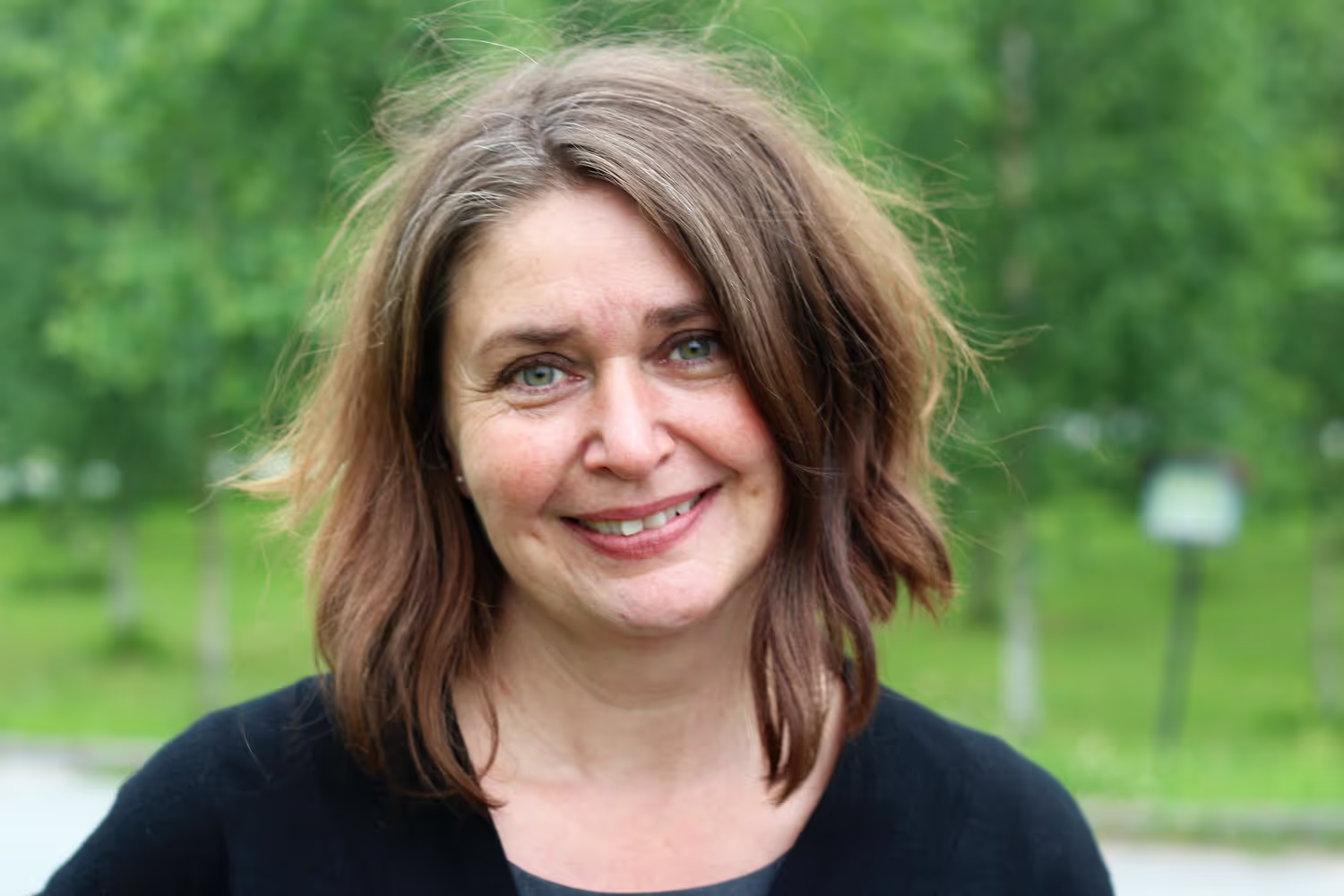
Living near death: a conversation with Katarina Blix Lundqvist
For Katarina Blix Lundqvist, the most beautiful thing about her work is to meet people in the middle of life, and in the midst of grief. As an officiant and singer, she leads funerals with both warmth and presence, describing it as one of the funniest and most meaningful parts of her life.
“I'm curious about people's life stories. It is stimulating to create a great moment together with our loved ones, where we honor life for real.”
When life crumbled and something new began
Catherine's interest in death and the conversation about dying has been around for a long time, but it was in 2017 that it became deeply personal. In a short time, everything changed with both separation and death, and she herself fell into a great grief.
“I then took a course in grief processing through the Swedish Institute for Grief Processing. It became an important turning point. Then I went to further education, both for my own sake and to be able to be there for others.”
Since then Katarina has devoted herself to creating space for conversations about what is often difficult to put into words. She wants to help make death less taboo and grief more visible. One of the ways she does it is through Death Talk, safe rooms where people are allowed to gather to talk about death, life, fears, meaning and loss.
Support at the very last stage of life
As part of her commitment, Katarina has also trained as a certified Death Doula and End-of-Life Planner. In this role, she supports people who are in the final stages of life and their loved ones, through conversations, preparations and presence. Sometimes it's about planning for death in advance, sometimes it's about being there when the end nears. Whatever the situation, her focus is to contribute calm, structure and human warmth. The training was conducted at Going with Grace in Los Angeles, under the direction of Alua Arthur.
Facing Grief — With Singing and Presence
For Katarina, the work as an official is not just about words. It's just as much presence, silence, music, and daring to remain in it that chafes. She often sings by herself during the ceremonies, and uses her voice as a way to create closeness and feeling.
Katarina, a. “It's about keeping a warm and safe frame where people get to feel, remember and say goodbye in their own way.”